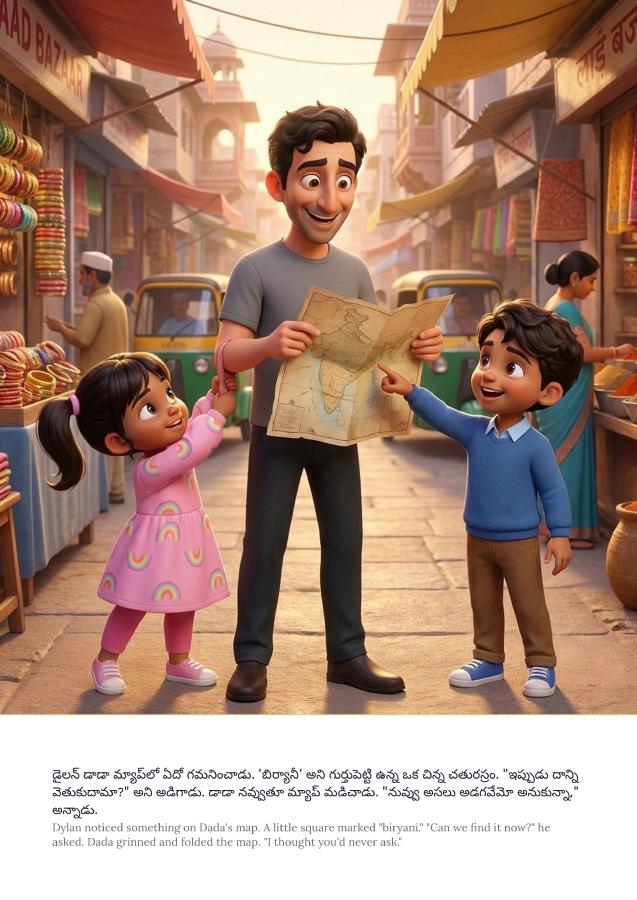
Our Family Legend creates bilingual heritage storybooks placing English alongside one supported heritage language throughout the main story pages. This side-by-side format allows children to draw visual connections between the two languages, while ensuring that caregivers who may only speak English can still participate fully in reading time without feeling left out.
Understanding the Limitations
Setting expectations is crucial when introducing a new language tool. Here is how our books operate:
- One heritage language per book: While we support multiple languages across our platform, a single book can only feature English and one additional language. If you are a trilingual household, you will need to choose one heritage language to focus on for that specific story.
- Contextual digital text presentation: The stories are designed and generated in English first. The heritage language is then translated contextually to match the tone of the adventure. This means it prioritizes natural storytelling phrasing over strict, literal word-for-word translation. Note that introductory pages or specific write-in elements might remain in English.
- Standard scripts only: We utilize standard scripts for our supported languages. We do not support custom phonetic spelling or highly regional dialects at this time.
- No audio narration included: At this stage, the service provides visual text and illustrations. Pronunciation guidance will rely entirely on family members, tutors, or external audio tools.
Practical Steps for Reading Together
Having a bilingual book is only the first step; how you read it matters immensely. Consider these approaches to get the most out of your storybook:
- The tag-team read: If one parent speaks the heritage language fluently and the other speaks English, take turns reading the respective paragraphs. This normalizes the presence of both languages in the household and makes reading a shared family activity.
- Point and connect: Because the text is presented side-by-side, encourage older children to identify recurring names, places, and simple verbs in both languages. Use your finger to trace the text as you read, helping them build visual recognition of the script.
- Focus on the free preview: Use the free text preview to read the story aloud before purchasing. Ensure the vocabulary and tone feel right for your family's language level. If the grammar feels slightly off for your specific region, you can adjust your reading style accordingly.
- Don't force translation drills: Treat it as a story first. The primary goal is enjoyment. If a child stops to ask what a word means, point to the English equivalent, but avoid turning bedtime into a strict vocabulary quiz.
Draft Family Scenarios (Ideas)
Every family's language journey looks different. Here are a few hypothetical ways these books might be utilized.
The Re-Learner Parent
Idea: A father who lost his conversational Greek as a teenager uses the book to re-learn alongside his toddler. The English text serves as his safety net, allowing him to sound out the Greek confidently without breaking the flow of the story.
The Multicultural Household
Idea: A family living in Australia chooses a Vietnamese bilingual book. The English text allows school friends to understand the story when the child brings it to class, while the Vietnamese text preserves the family's roots at home.
Your Next Step
Review our collection of supported languages to ensure we offer the heritage language you need. Once you select a language, you can generate a free preview. This preview includes the complete text, cover, and opening illustrations, allowing you to see exactly how the bilingual layout reads before making any financial commitment.